

What is internal culture change?
Changing your organisation’s culture for the better means developing an environment where the collective actions, decisions and behaviours of employees point in the direction of a shared goal. To get there, it’s imperative to recognize where you are now (your current reality) and where you want to be (your envisioned future). The tension between these two states creates the momentum for change.
Given that the dimensions of internal culture are often set by leadership, it follows that a strong, cohesive culture is a sign of effective leadership, and with innovation at the core of culture, it can set one organisation apart from the rest. There are many inspirational organisational culture examples, but your internal culture has to be uniquely yours, and built upon the strengths and superpowers you already have. Only if it is aligned with your goals, strategy and aspirations, will you find success.
What are examples of cultural transformations?
The drivers of cultural transformation can be internal or external:
- Externally, an organisation may be facing decreasing market share, losing competitive advantage, seeing a drop in customer satisfaction or an increase in complaints, a tainted brand reputation, or a merger or acquisition.
- Internally, an organisation may see a drop in performance or productivity, employee attrition, decreasing engagement scores, or may need to adapt to a new strategy, organisation structure, or a change of leadership.
Most often, organisations feel pressure from a combination of these drivers, as they are often linked and impact one another. In fact, attributing the need for cultural transformation to a single event or cause is oversimplifying a complex set of dynamics. A better way to think about transformation is as a capacity and skill to cultivate across your organisation. In doing so, you build the ability to continuously reinvent yourself when faced with a variety of drivers, and as your environment changes (because it always does and will).
In this way, transformation and innovation go hand-in-hand – both are about the ability to reinvent, reimagine, and respond to a world that’s in constant flux.

A great example of a cultural transformation journey comes from the CFAO Group, a diverse company with a presence across 45 African countries, and brands across many industries, including automotive, healthcare, and consumer goods. When the CFAO Group acquired a Mozambican automotive dealership, they enlisted the help of InkDot to support a culture transformation program with a goal to bolster their success in Mozambique. Embondeiro was the symbol and name chosen for the transformation program, for all of the reasons mentioned above about the unique and instantly recognisable baobab. For CFAO Mobility Mozambique their transformation journey focused on embedding a customer focused and collaborative culture, acknowledging they must embrace transformation to remain relevant now, and in the future.
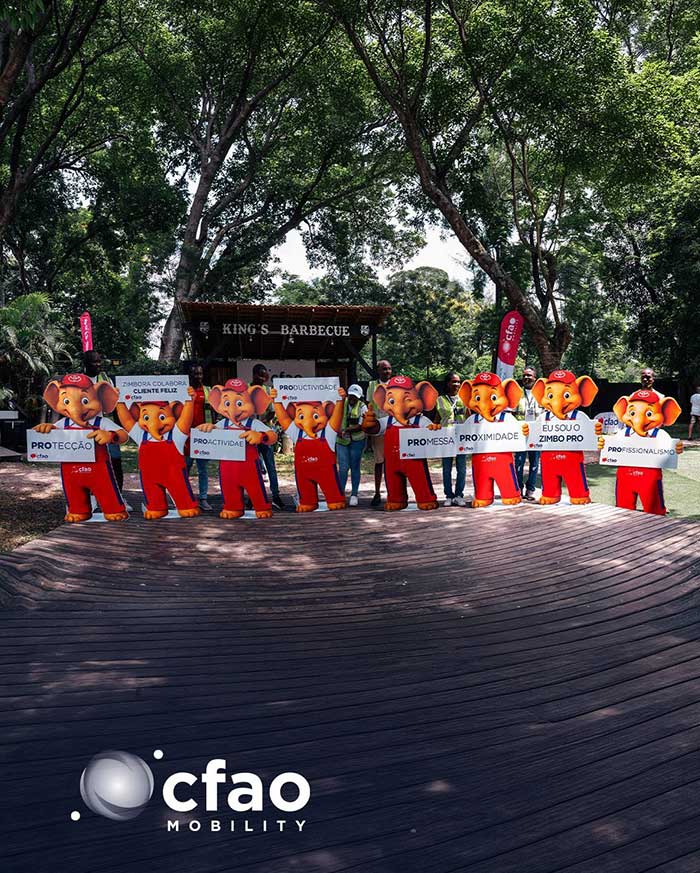
InkDot’s culture transformation consulting is about growing this capacity in leaders, teams, and organisations, equipping them to boldly navigate complexity and to build their ability to meet emerging needs. It’s more than just fixing a single event or problem, it’s about strengthening the organisation and increasing its adaptability for the future.
Schedule a Discovery Call with the InkDot team to uncover your transformation potential.
What is the role of culture transformation?
Culture transformation is about anticipating, preparing for and shaping the future. So the question becomes, what is your organisation doing now, that will set you up for success in the future?
“66% of C-suite executives and board members believe culture is more important to performance than the organisation’s strategy or operating model”
Whilst it feels intuitive to the majority of leaders that culture is a key driver of performance, many have seen transformation efforts fail to bring results. In order for any culture transformation initiative to take hold and be effective, we believe it must have innovation at its core. At InkDot, we work in service of the strategic goals of the specific organisation and emphasise building a culture of innovation within it.
It’s our job to equip:
- organisations with the specific innovation strategies and mindsets that will help them respond powerfully to their biggest challenges.
- employees across the organisation to spot early signs indicating a need for transformation and to develop alternatives to get ahead of the challenge.
- leaders to steward transformation with confidence, and to create the conditions for innovation to take root.
These three goals are about being responsive and attentive to the shifting context, just like the baobab tree. If we are paying attention to the system (of the organisation itself, and the external system it operates in), we can minimize the nasty wake up calls or and avoid being suddenly surprised that the dirt is dusty, the air is dry or that the season has changed! The impressive baobab tree adapts over time to the shifting environment, and influences its surroundings in a similarly dynamic fashion. The tree has learned to notice the signs that dry, hot weather is coming – so it stores water to survive the drought. When all other plant life around it starts to wither and brown, the Baobab stands tall, strong, and healthy.
We’ve all heard of the companies that rise and fall, with examples such as Nokia and Kodak being held up as warnings about failing to adapt in time. Resilient organisations need many things to survive and thrive in these complex times: competitive products and services, a strong brand and loyal customer base, financial health, efficient systems and processes…the list is endless.
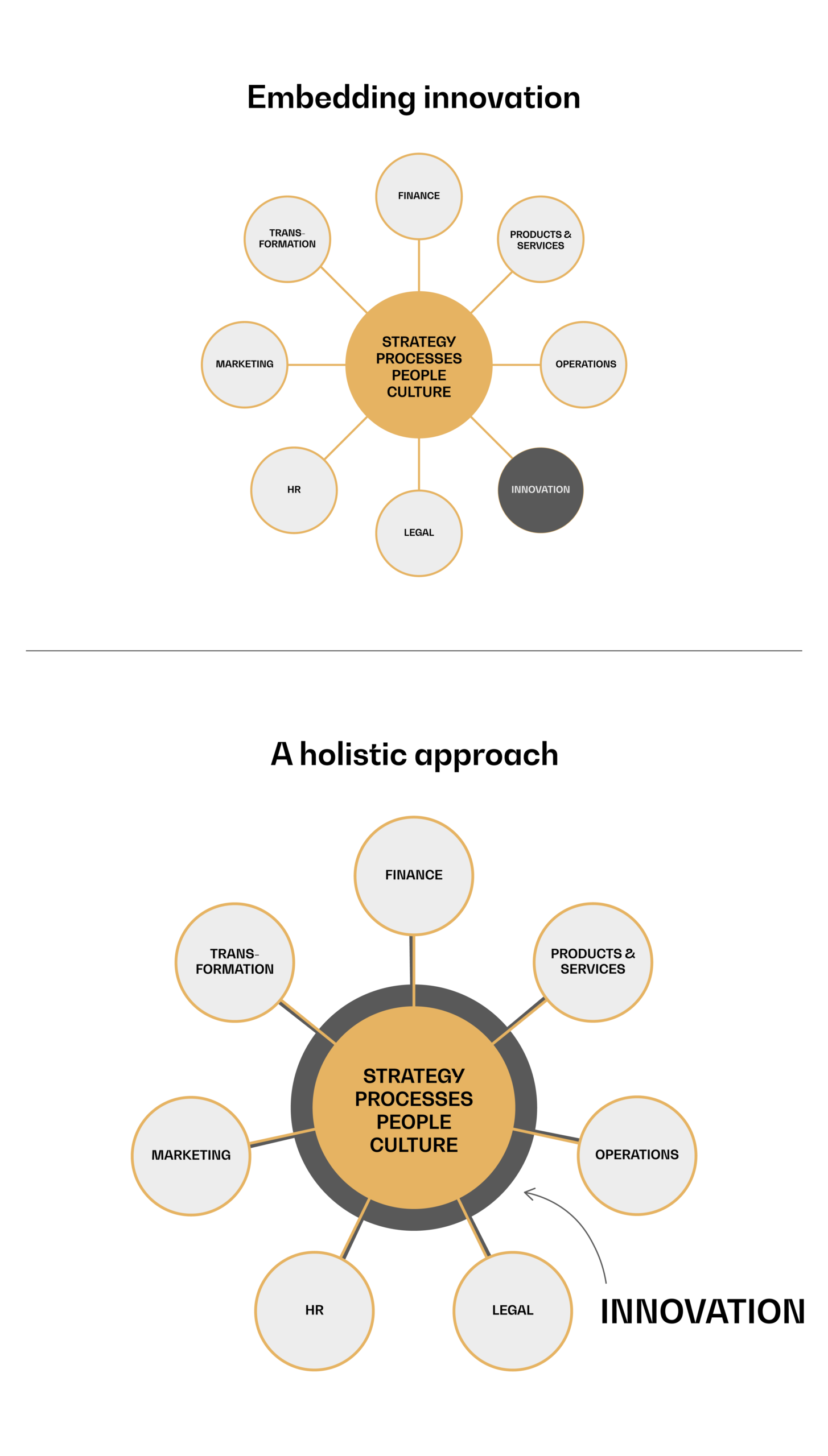
Fueling all this, is a culture centred in innovation that drives all of these metrics and more; a culture that is brought to life by people across the organisation and aligned with the strategy. Often, innovation is seen as an add-on or stand-alone initiative, pushed through by a few “innovation specialists” or one department while everyone else gets on with business-as-usual. Embedding innovation requires everyone to understand innovation in relation to their specific areas and to take ownership of putting it into practice. Everyone has a role to play.
What are the internal factors of culture?
Don’t get too caught up in models and systems that seem to be a magic formula for success. They can be useful as a frame of reference but a cookie-cutter approach isn’t ideal when it comes to the complex ecology of organisational life. Always hold frameworks and tools lightly, and ground them in your specific reality.
With that in mind, the Competing Values Framework (CVF) is a model that can help you understand your current or desired culture and offers a good lens to view different types of organisational culture.

The team at InkDot used this framework during the culture transformation process with CFAO Mobility Mozambique (mentioned above) to determine where they were and where they wanted to be. It helped them clarify their culture goals to:
- Strengthening the “collaborate” focus across the organisation, in service of a cohesive customer experience.
- Building leadership capacity to mentor and coach their teams, and encourage ‘PRO’ customer service.
- Identifying and nurturing the next generation of leaders in the organisation.
The framework helped them clarify specific behaviours, ways of working, and habits they wanted to build.
“With the inputs that InkDot has been providing us, we have been able to adjust this program to our needs. The InkDot team has shown a level of knowledge that gives us a lot of comfort for this type of project.”
– Catarina Semblano, Human Resources Manager, CFAO Mobility Mozambique (2024)
An organisation can be innovative no matter which of these CVF quadrants they fall into, but it will show up very differently for each.
How do you build internal culture?
As we’ve discussed above, building internal culture isn’t only for those that hold specific culture transformation jobs. Employees across the organisation can and should play a part in moving the needle.
As one of many culture transformation examples, our team begins with the end in mind, and juxtaposes it with a depth of understanding of the current situation and context. We ask, “from where, to where?” We spend time at the start of the culture transformation process to understand our clients’ now. We call this their “as-is” state. The “to be” state is equally important, and involves defining their envisioned future. We identify and clarify their specific goals for the internal culture, and the results that they are driving towards. The tension between these two points (“as is” and “to be”) is like a rubber band, winding up and building momentum to launch us to where we need to go.
“The most effective people are those who can “hold” their vision while remaining committed to seeing current reality clearly”
― Peter M. Senge, The Fifth Discipline: The Art & Practice of The Learning Organization
What are the 5 steps in changing culture?
After identifying where you are starting from and where you are headed, here are a few foundational principles for beginning to shift culture:
- Recognize that culture transformation isn’t an initiative, it’s a movement. Prioritise building momentum and bringing people along.
- Give your desired culture a name or brand. Giving your efforts an emotive identity, project name or metaphor (like the Embondeiro project), signals change to all employees and anchors the process in a more symbolic way.
- Build a coalition. Form a group of champions for this initiative that includes leadership, but that represents all parts and levels of the organisation.
- Identify people who show curiosity and openness to the culture change and get them directly involved with key responsibilities that demonstrate and model aspects of the new “to be” culture.
- Pay attention! As things start moving, you will begin to see the places that have momentum and the places that are stuck. The work of transformation requires a response as things start shifting in unpredictable ways.
These early “rain drops” of change, need to be nurtured and encouraged by leadership and the environment needs to actively incentivise what’s working. Remember, culture transformation isn’t about individuals changing, it’s about a whole system shifting.
“You cannot force commitment, what you can do… You nudge a little here, inspire a little there, and provide a role model. Your primary influence is the environment you create.”
― Peter Senge
What are the goals of culture transformation?
Encouraging culture transformation in the workplace can seem like more art than science, but once you ground in the understanding that you are influencing a complex adaptive system, navigation becomes clearer. Even an artist needs to hone their skill, craft and tools, understanding the theory of essence and form, and applying them deftly to the specific needs of a specific piece.
In the same way, culture transformation can be supported and intentionally cultivated despite its fluid movements, lack of predictability, and need for customization. We look to organisation development, systems thinking and culture transformation theory to ensure robust processes, even as we navigate emergent transformation processes.
When determining the goal of your organisation’s culture transformation initiative, start with the end in mind, and couple that with a deep understanding of your current situation. This includes finding clarity on specific internal culture goals and the results that you are driving towards. This will be unique to your organisation.
InkDot clients have set strategic goals for their culture transformation that include:
- becoming more customer focused,
- improving collaboration or de-siloing,
- establishing a high performance culture,
- increasing profitability and/or impact, and
- building a learning culture.
These specific goals were tailored to context, and the theories and interventions chosen for the transformation were determined by what they were trying to achieve. The same should be true for your process.
Build a Culture of Innovation, from the inside out
In urgent times, we can’t afford to speed ahead in the wrong direction. We help our clients gain the clarity it takes to accelerate, in service of your goals and in a meaningful direction. We equip you with the tools necessary to make innovation work in your context, and to nurture the innovative culture that keeps you agile and adaptive.
By partnering with InkDot, you will connect with what is already working, build on what you are already doing, and amplify your strengths to create even more value. If you want to stay relevant in a shifting landscape, and ultimately to shape your future for the better, you are in good hands with us.
