

Language is a fascinating construct. There are some words that mean the exact same thing across many countries. There are other words that people use interchangeably but actually have different meanings: guarantee vs. warranty or envy and jealousy, for example.
When it comes to innovation mindsets In the workplace, “strategy” and “plan” are also used interchangeably, but have different meanings. A bit of an oxymoron, “strategic planning” are two words often merged together even though they have two complimentary, but different meanings:
- Strategy is a set of decisions and choices an organisation makes about the space they want to play in, and the outcomes and values they want to realise. Strategy sets the vision and direction for your plan, and outlines your theory about how and why you will be successful.
- A plan is the process to get to the strategy: the steps you will take, the details about who will take them and when, the resources you will allocate to this and how you will know you are making progress.
Leaders often think they have a strategy when in reality they only have a plan. And if they do have both, strategizing and planning often happens in a vacuum among a select few.
Our team at InkDot has expertise in bringing teams of any level together, in strategic reflection, decision making, and design. We guide them to first set or contribute to their strategy and then develop plans that have a chance of success upon execution.
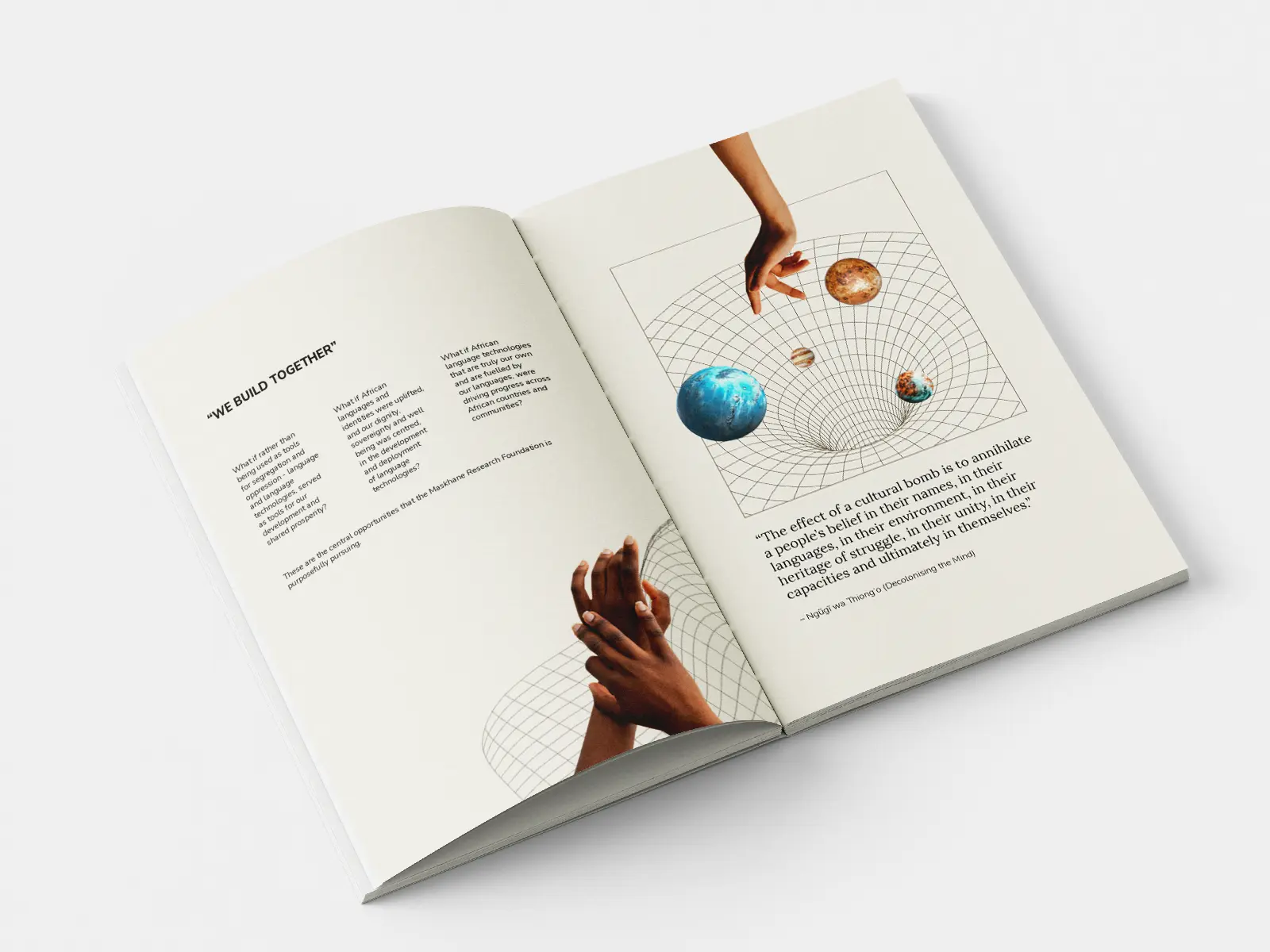
As a real life example, InkDot client Masakhane Research Foundation (MRF) is on a mission to reclaim African languages, and to ensure that they empower progress, development, and prosperity for African people across the continent. MRF is a non-profit, community-driven research institute for African natural language processing (NLP). They have a community of technologists, linguists, African language speakers, researchers, and social scientists (2,500 people in over 35 African countries and in the diaspora) that are creating technological solutions, for, by and with Africans, and grounded in African values and voices. Their aim is that African people, communities and countries can fully participate in the exponential technological wave that is happening globally.
We have supported MRF in bringing their leadership and community members together in a participatory, strategic reflection and design process, developing their 5-year strategy. Oftentimes, strategy is just a document with good intentions that struggles to be understood across an organisation and therefore struggles to live off the paper. That’s not the case for Masakhane or any of our clients. We specialise in a strategic planning and alignment process that brings the whole organisation along.
We deeply believe that innovation is for everyone, and strategies become more rich, innovative, and actionable if there is participation from all. Book a discovery call with our team today to explore the benefits and possibilities of making strategic thinking accessible across your entire organisation.
What is a future proof strategy?
Along with the lack of distinction between strategy and plan comes another challenge: a tendency towards short-term thinking that stunts growth and progress.
You may be facing this challenge if:
- You are stuck in a loop of monthly, quarterly, and/or annual planning, rather than taking a multi year approach.
- Everything is in urgent mode, with no time to slow down to reflect on whether you are headed in the right direction.
Short term thinking creates a choppy system that changes before real change is realised (annual performance reviews, a new CEO undoing the work of the previous one, or even government elections are good examples of this).
Nothing is too urgent to go fast in the wrong direction. Future-proofing in business requires us to be adaptive, responsive, agile, flexible, and continuously reinventing. But this shifting, pivoting, and adapting needs to be consistent around a shared strategic purpose. Otherwise, everyone runs in different, sometimes competing, directions, and we chop and change before we see any results.
Why is vision so important in business?
Our world of work can feel a bit like driving at night. You can only see as far as your headlights can show you. If you switch to the high beams, you can see a bit further. It’s only when you move your car forward that you can begin to see more of the road ahead. Because you are moving, you have to respond to it as it emerges. In order to navigate the road successfully, your car should be adequately maintained (working headlights), serviced (the right fuel in the car), and equipped (4 wheel drive or snow tires, depending on the terrain). And, of course, you need to know where you are going.
This visual represents the nature of complexity well. By definition, complexity doesn’t have a clear, cause and effect solution with which to move forward. For businesses, having a vision is knowing where you are going. Between you and the outcome of your vision sits the dark, winding road of complexity. As you move towards your vision and begin to see the path before you, creative strategic thinking in business provides the responsiveness you need to adapt to the forever shifting and emerging context.
What is the impact of vision in business?
A strong vision prepares you to respond to exact details of the journey that only emerge as you move forward. Defining the problem and opportunity spaces is one of the best tools for strategic thinking. This allows you to set your vision as your guide, even if the road ahead looks dark.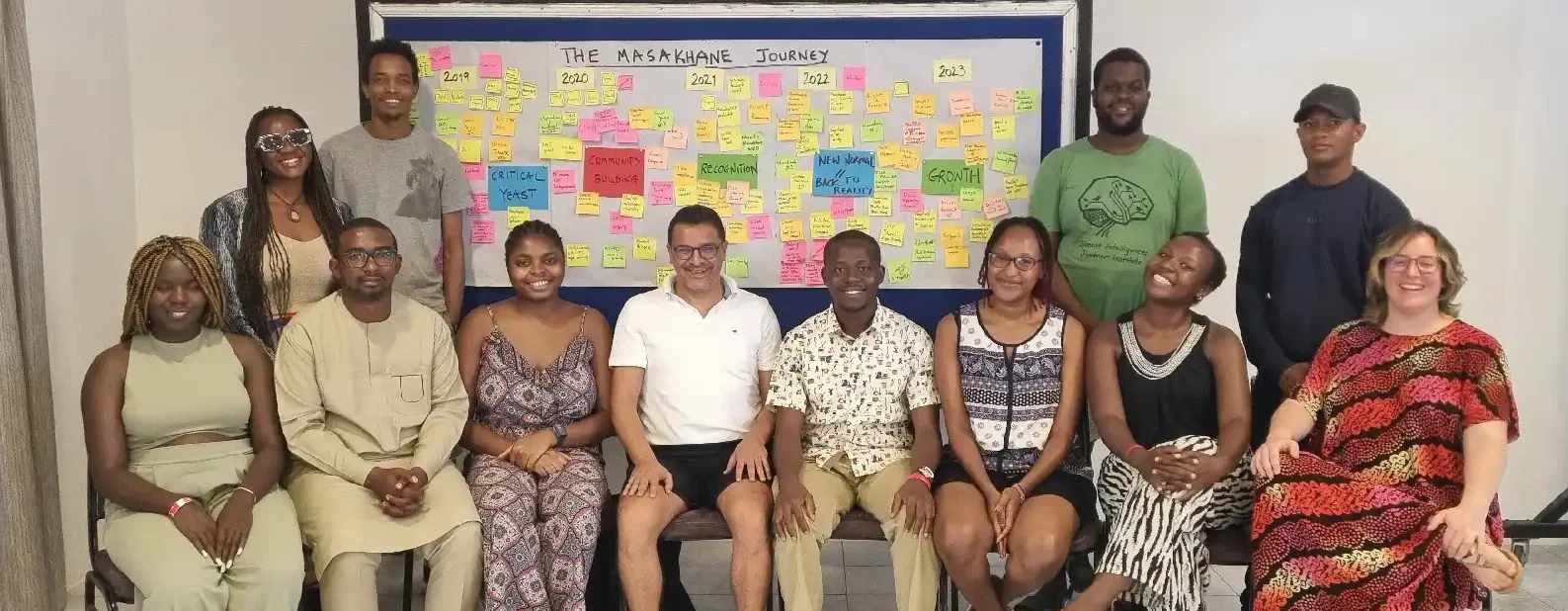
InkDot hosted a strategy retreat for our client MRF (introduced above), and we spent an entire day exploring both the problem and opportunity spaces. The first step was defining their problem.
“A problem well stated is half solved” is a common saying, but we like to take that further: the way we define our problems determines what solutions we can conceptualise. The scope of the challenges we set ourselves determines the level of strategic ambition we are able to realise.
For example, if MRF had determined that they were purely a tech research institute they may have been satisfied with creating data sets of African languages. Or if they were trying to solve the challenge of African languages being undocumented and unpreserved, then they might have started an online library.
But for the strategy retreat participants, the group determined that they weren’t just driven by technology for technology’s sake. They were interested in turning the tide on language technologies as a tool for segregation, imagining them as a tool to power progress.
“Based on this problem and opportunity space, explored through lots of dialogue and interaction, and then articulated based on the collective intelligence surfaced by the group, we were able to come up with a powerful mission and vision statement that would anchor the rest of their strategy.”
– MRF Strategy Document
Innovation methodologies can bring rigour and structure to our strategic decision-making, transforming it from “chop and change” to future proof. There is a whole repertoire of innovation tools and approaches that can future-proof your strategy and anchor you in trends, scenarios, foresight, visioning, empathy-driven observation, and research. Book a Discovery Call to explore what our team of experts recommend for your specific business situation.
What are the 5 C’s of strategic thinking?
A quick google search on strategy points us to checklists like ‘The 5C’s of Strategic Thinking’. If you’ve followed us for some time you will know that we don’t believe in silver bullet, one-size-fits-all solutions. That said, there is one classic strategy framework that we find relevant: customers, competitors, and company. This was developed by Japanese organisational theorist and long-time management consultant Kenichi Ohmae.
The 3 C’s are a strategic approach and tools for analysis in strategic thinking and focus on three factors for success:
- Customers (and their wants and needs) should be at the core of any strategy, and the primary goal of your strategy should be to meet these customer expectations.
- Looking beyond your organisation, you need to build strategies with your Competitors in mind. How can you set yourself apart in the market?
- Your strategy should incorporate the ways in which your Company will excel and account for the strong, unique capabilities you have that add value to your customers.
Ensure your 3 C’s strategy is rooted in an innovation mindset and take into account how things evolve. Your strategy needs to remain relevant and responsive to the shifting reality.
What are the 6 P’s of strategic thinking?
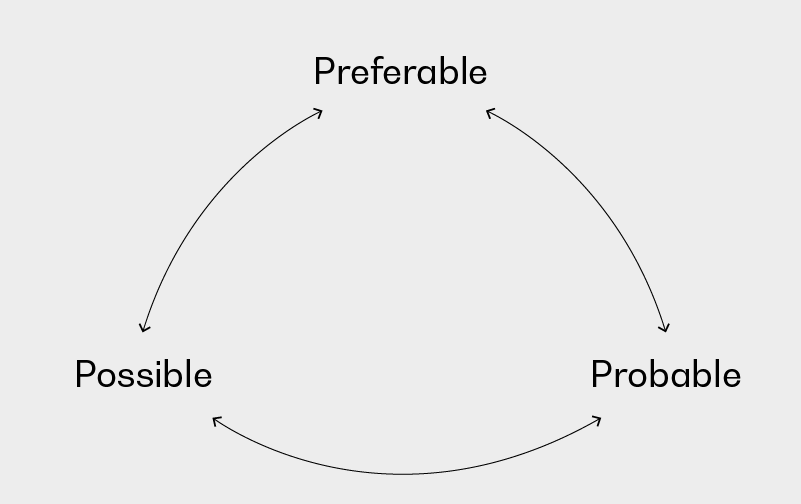
The 3 C’s of strategic thinking have a companion: the 3 P’s. Of the many tools for strategic planning, this is one that serves to create a future proof strategy. Toffler-Amara 3 P’s, also known as “thinking styles” or “foresight skills,” can be expanded out into the following 6 P’s:
- Past & Present – These help you prepare for defining your strategy based on learnings from our past experiences and insights from your current reality and context.
- Probable – This is where you “anticipate” where things are headed and the likely pathways that lie ahead.
- Possible – This is where you “innovate” by thinking through what other possibilities may be available to you as you move forward.
- Preventable & Preferable – This is where you get strategic. You balance all of the above into your preferred path forward, including how you will avoid or mitigate the preventable futures you do not want to bring about.
The 6 P’s serve as scaffolding for your reflection process, helping to produce strong strategy inputs.
Which tool is used for strategic planning?
The MRF case study above brings together a variety of strategic thinking tools and techniques as an example of how you can pick and mix based on your particular context.
Off-the shelf solutions might work for some, but we’ve found that flexible solutions and processes that account for the unique and individual needs of our clients are what make the difference. From the moment we begin work to project conclusion, we are constantly adapting and responding to the unique challenges unearthed in our process consulting. No two projects are alike. Schedule a Discovery Call to learn what the process might look like for your organisation.
What are the 5 steps of the scenario planning process?
When it comes to scenario planning techniques, our go-to 5 step process is:
- Go wide in exploring the problem and opportunity space. This is key to future-proofing. It’s easy to go so narrow that your strategy becomes unambitious and irrelevant at the first context change.
- Set a vision, or at least draft a direction for now.
- Identify drivers that can impact the space in which you play, or intend to play, or what your organisation contributes to the space. Remember to think long term!
- Select the most critical drivers. We suggest choosing two to keep it manageable.
- Create future scenarios from the “worlds” of each of the intersections of the drivers that you imagined.
Once you completed these five steps: do something with the scenarios! Your strategy should respond to the scenarios. Ask your stakeholders:
- What opportunities do these scenarios bring to light that we can leverage?
- What risks do these scenarios raise for which we need to mitigate?
- Who or what can we influence to move in the direction of our preferred future?
- What disruption and/or innovation is needed to chart a path among these possible futures?
What is creative strategic thinking?
Strategy tools and frameworks only go so far. You have to continuously review and refresh them, and raise them off the paper into real life:
- This is where the plan comes in: allocate people and resources to make it happen, define exactly the what, how, and when for your strategy activities, and pay attention to progress as you move forward.
- Then, adaptability enters the picture: responding to changes in the context in real time, especially when you are navigating complex terrain.
- When there is a need to adapt, innovation-minded leadership steps in, creating the enabling environment for a strategy to actually be implemented, removing blockers and spotting opportunities as you move forward.
You are best served as an organisation if your people were along for the strategic reflection and design phase and feel like they contributed to it, understand it intimately, and know how the strategy came to be.
The MRF process mentioned above relied both on creativity and strategic thinking, even though the two lenses can feel at odds: creativity is about ideas, imagination, dreams, aspirations, and finding novel solutions while strategic thinking is about taking decisions, carving away ideas and prioritising based on evidence and data. Weaving in and out of these is what creates a robust and future proof strategy.
