
Leadership Development

“At the end of the day, the make or break is the people. It’s people. That is what your organisation is. No matter how big you are, no matter what you sell. What services, or no matter what. It really is down to people.”


– Hugo Chichava, Founding Partner at Kubhula.


https://open.spotify.com/show/6NI9DI6zTw3Fg5S6lPD58s || 1:02:45 -1:06:48

What type of people do you want working for your organisation? You want people who believe in your organisation, right? It’s an organisation’s duty to make the workplace a space where people want to show up. Are you leading towards that space?

Innovation leadership, in particular, is critical in the complex world we operate in. Innovation leadership is anchored in innovation mindsets in the workplace, with the added dimension of enabling others to perform and creating the environment for innovation to take place. Its main purpose is keeping the organisation future-proof.

Unfortunately, more than 50% of senior leaders believe their development efforts don’t adequately build critical skills and organisational capabilities that make a difference in their trajectory (Harvard Business Review).

Nimble and customised leadership development is a key strategic imperative for any organisation that wants its people to continuously deepen and expand their expertise, and that wants to have a culture of learning, continuous improvement, and innovation.


The team at InkDot works side-by-side with passionate, driven professionals from across the world to unlock their innovation potential. Book a Discovery Call with us today to take the first step towards innovation leadership.

What is a good definition of leadership?


Leadership is a role that comes with the authority and responsibility to guide and orchestrate work. It is also a mindset and way of being that inspires, empowers, and enables others.

But more than that, if you are leading…where are you leading to? Impactful innovation leadership is setting direction, articulating a compelling vision, aligning people around that vision and enabling collective action towards it. This can happen at any level of the organisation. You don’t have to hold a manager, director, or supervisor title to lead innovation.


What leadership really means


Iron Man, Super Man, Batman … the globally dominant culture has built up lone superheroes as examples of leaders we need under crisis. We’re addicted to the idea of a “hero leader,” who drives others forward with their magnetic personality and charisma. Our collective focus tends to be hyper-individualistic: from social media influencers to government hierarchies.

For the team at InkDot, especially after working in and across a variety of African cultures and countries, it’s clear that we need fresh leadership styles and models that focus on leadership as collaborative, inclusive, enabling, and collective. We don’t need another Super Man. Even though our challenges are urgent and many, the nature and complexity of the leadership challenges are such that they cannot be solved by any one perspective, let alone person. 


“If one thing has become piercingly obvious as a result of the global pandemic, it is that everything and everyone is deeply interconnected. Whether we are talking about the invisible spread of the virus across borders and other imaginary boundaries, the potential domino effect when one link of a supply chain is unable to survive, or the contribution of the healthcare system to our entire social fabric, it is clear: we are part of (not separate from) a complex system. 

This is not a new realization, but never before has it so directly impacted so many people, in a way that is impossible to ignore. I believe that this reminder of interconnectivity points towards changes in the way we will lead; towards more connectedness, less individualism. It means the days of the Lone Ranger or Superhero leader are numbered, and the space for collective leadership opening up. It is in this space that Africa has a lot to share with the world. 

For my co-founders and I at We Will Lead Africa, collective leadership means a leadership that is relational, human, empathetic. Grounded in dialogue and story-telling, it is deeply respectful of the unifying web that we all form part of. Across African countries and cultures, we see different expressions of this we-ness. One example is the term Ubuntu, usually translated to mean “I am because we are”, that has become familiar globally.” 

– Sarah Owusu, originally published in A new narrative: The rise of African Leadership, Collateral Benefits 


What are the 4 E’s of leadership?


If we look back to more traditional models of management, we find many frameworks that set a standard for what good leadership looks like. One well known example comes from Jack Welch, a businessman who served as CEO of General Electric (GE) for 20 years. His leadership style and practices continue to influence much of today’s management and leadership training

He left the 4Es of leadership as part of his legacy, which were the basis of leadership assessment and development at GE. 

These 4Es are:

  • Energy – the stamina and enthusiasm a leader displays
  • Energise – a leader’s ability to mobilise, or move their teams
  • Edge – a leader’s ability to recognize, face and resolve problems, strong decision-making, and ability to navigate conflict
  • Execute – delivering results


Rooted in an innovation mindset, we believe there is a critical 5th E missing in this model:

  • Empathy – a leader’s ability to understand and connect to the people they are leading


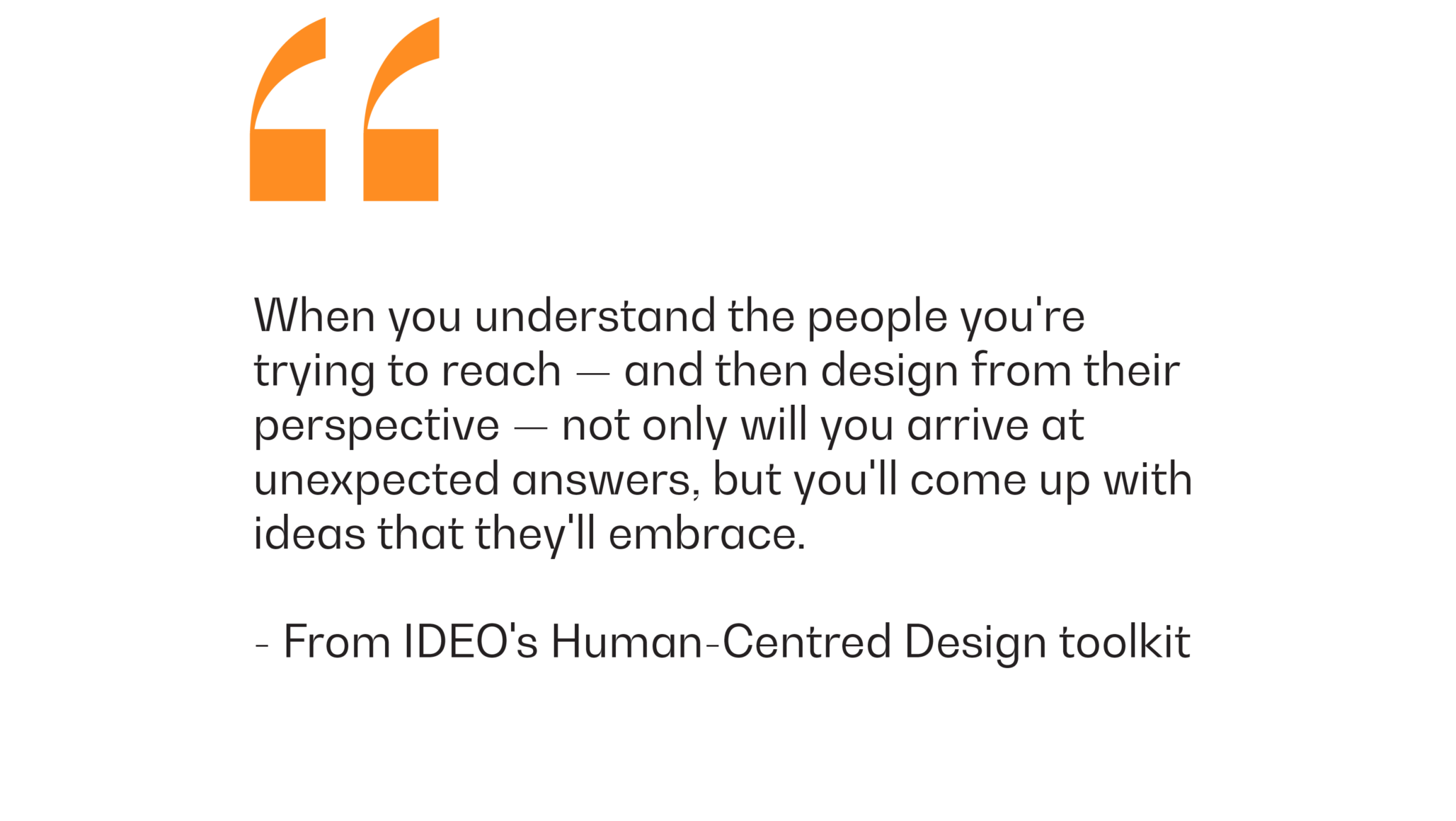
Empathy is the key to innovation-focused leadership. When you understand the people you are trying to reach, both customers and employees, and then design systems and processes from their perspective – not only will you arrive at unexpected answers, but you will come up with ideas that they’ll embrace.


What are the 5 qualities of a good leader?


Narrowing down the qualities of a good leader to only 5 is impossible. A simple list of 5 qualities is the complete opposite of everything that InkDot stands for. You cannot copy-and-paste leadership from one organisation to another, or from one leader to another.

Different leaders should find ways to express qualities that are authentic to them and that respond to the needs of their teams and contexts. Different moments require different qualities, and so much of the role of the leader depends on discernment. A quality that is required today may be completely unnecessary a year from now when a different complex problem and situation arises.

For example, we delivered a leadership development program for Mozilla Foundation that supported the leadership team to move from a group of strong, individual leaders to a cohesive and collaborative team. This program included development of a team charter, a series of 4 leadership retreats, and a tailored “skills repertoire” centred on their specific organisational goals and context.
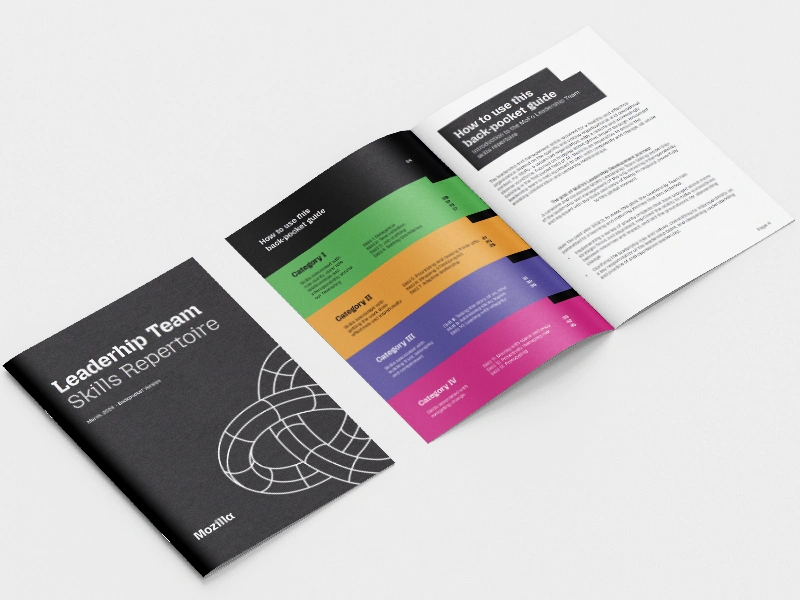
Here is a peek into the skills repertoire:


“Whilst having clarity on the scope and expectations of the role of a Mozilla Foundation leader is critical, a role description will never provide an exhaustive picture of what it means to lead in practice. Being effective as a leader requires us to have at-our-fingertips access to a skill set that supports in the day-to-day of work, and flexes to meet the variety of situations what are inherent – but not predictable – in leadership.” 

The repertoire consisted of four categories and 13 underpinning skills, that are all interlinked and complimentary, so that improving the capability in one area will have positive impacts across all categories. 

“During the consultancy, InkDot demonstrated their expertise in tailoring specific, innovative and transformative approaches to our unique needs as a global organization. They were adept at assessing the root cause of organizational challenges, through deep listening, individual and team engagement. They supported us through a critical period of change, proposing bespoke interventions that were human-centered and rooted in best practice. Through thoughtful partnership and engaging program design, they built trust with leadership and staff, and have been essential in helping our team evolve and grow.”

– Angela Plohman, Chief Operating Officer, Mozilla Foundation


As mentioned above, there is no innovation without Empathy, so if we had to pick one leadership skill that everyone should have, it would be that. Empathy and Care are crucial prerequisites for innovation leadership and therefore, are one of InkDot’s Core Values. Building trusting relationships isn’t just important to us, we consider it the core of our work. We do it through openness, deep listening and respectful attention and support – these characteristics bundled together create our deeply empathetic and caring team. If you’d like support in moving your leadership team from individual focused to a cohesive, collaborative team that works together to solve your organisation’s biggest challenges, book a Discovery Call to explore.

What does focused leadership mean?


There are many perspectives and frameworks for developing leaders. As mentioned above, Jack Welch promoted the 4 Es and was known for his single-minded approach to leadership: with a clear strategic direction and imperative, the role of the leader is to completely focus on driving towards this focus. 

Another often cited leadership strategy comes from Daniel Goleman, who states that “the primary goal of leadership is to direct attention.” This approach groups this focus of attention into focus on self, focus on others, and focus on the wider world.

With so much complexity around us and in the world of work and business, combined with an individualistic global culture, this kind of dogged focus has its appeal. But the reality is little lasting impact comes from one person or leader. Given the fact that we work in networked organisations, leadership requires collaboration to solve the most complex challenges and wicked problems we face. It’s about orchestration, coordination, and connecting the dots…even when we can’t do so by drawing a clean, straight line.

As we worked on the leadership development program for the Mozilla Foundation (mentioned above), they identified their key mandate to enable interoperability across the organisation, in service of their strategic purpose. For them, and our recommendation for any innovation minded organisation, is to pursue leadership focused on collaboration across the whole system.


What are future-focused leadership skills?


For a leader that wants to stay future-focused, some of the critical leadership skills to develop are in some ways those of a futurist…making predictions based on past experience will only get you so far in today’s rapidly changing and increasingly complex world. The futurist shows us that whilst we shouldn’t expect certainty, we can prepare ourselves for the future by balancing signals and evidence of emerging trends with scanning the horizon for what’s emerging. 

What we do know is that to remain future-proof and future-relevant, a leader must: 


If you need support determining how to future-proof your team or organisation through powerful leadership, book a Discovery Call with our team today.

What is the future focus mindset?


To develop the future-focused mindset that supports innovation, leaders can prioritise 5 essential leadership skills:

  • Ruthless imagination – In the face of what seems impossible, an imagination and sense of possibility is critical…even when it’s easier to be apathetic and hopeless. A leader must imagine alternatives.

  • Long term thinking – Short term wins aren’t good enough when we face the magnitude of complex, global, and existential challenges. Long term thinking is to think beyond your own gains but rather to consider your legacy. What might it mean to be a “good ancestor” (a term we love from Layla Saad)?

  • Navigating complexity – When facing uncertainty and the realm of the complex, a future-focused leader is willing, steady, and ready to take action. Imagine a surfer who can’t predict what the next wave will do, but responds in real time to the chaos and roughness. The goal is to come out of the other side of the wave still standing.

  • Active inclusion – More than just eliminating exclusion, we need active inclusion of multi-faceted experiences, identities, and perspectives while also creating the psychological safety it takes for people to take risks and unprecedented action. 

  • Adaptability – Emotional intelligence, ongoing development, and an innovation mindset are needed from leaders. Traditional top-down leadership isn’t nimble enough to adjust as quickly as the world changes. We need leaders who collaborate and flex together to meet the current challenge. 


Important qualities a future leader must have


Future leaders must take continuous leadership skills development seriously if they want to stay relevant in the complex, ever-changing world. The qualities they need will shift with time and changes in context and must be tailored to the specific organisation they find themselves in.

For example, the Mozilla Foundation, whose focus is on reclaiming the internet, deems adaptability and agility an important leadership quality because of the exponential advancements and attention on Artificial Intelligence to which they need to remain responsive. Their leaders must be equipped to respond powerfully to this moment, given their purpose as movement builders around Trustworthy AI. 

The imperative is different for each organisation, but one thing remains the same: continuously deepening, expanding, growing, and developing as a leader is non-negotiable. Long gone are the days when one management book will serve you well throughout your whole career. Staying static will make you, and the teams and organisations you lead, imminently obsolete. 

Future-Proof Your Leadership Team 


Your current problems are not going to go away on their own, and an effective solution may take more effort than your current “hero leaders” can give. We are the thinking partners your organisation needs to move towards ubuntu – “I am because we are”.  You don’t need to navigate your most complex challenges alone. We bring fresh perspectives and possibilities to leadership development by using non-traditional, innovative methods that transform organisational processes, systems, and culture.  


Innovation used to be the job of a few experts. Now, it must be woven into the fabric of an entire organisation in order to achieve true success. That’s where InkDot comes in. Book a Discovery Call to explore what repertoire of skills will future-proof your leadership team.

Get in touch.

Tired of seeing or using old methods that only seem to add to current challenges, instead of helping you to adapt to and shape the world around you? Looking for a strategic innovation partner who can help you break out of business as usual?


Get in touch to book a discovery call with one of our innovation specialists.

OUR EXPERTISE

LEARN

CONNECT

InkDot – Innovation Consultancy
2026 | All Rights Reserved

Pardon our dust, we’re giving things a fresh coat.

We’ll be back before you know it!